
27 September 2026
Dry Ridge And Dry Verge On Croydon Roofs: Why Mortar Keeps Cracking And What Replacing It Costs
The ridge and the verge are the last sand and cement on most Croydon roofs, and the first thing to let go. What dry fix systems do, and what the work costs here.
Nearly every roof in Croydon has one detail on it still doing a job it was never really built for. The tiles are fine. The battens are usually fine. But along the top of the roof, and down the sloping edge of every gable, there is a line of sand and cement holding tiles in place with nothing but grip, and that grip has a shelf life. It is the reason people find grey rubble in the gutter after a windy week, and the reason a ridge tile occasionally ends up on a car in Thornton Heath.
The last inch of sand and cement on your roof
Two parts of a pitched roof were traditionally bedded rather than fixed. The ridge is the capping along the apex, usually half-round or angled, sitting across the top course of tiles on both slopes. The verge is the edge where the roof overhangs a gable wall, finished with mortar packed along the tile ends over a thin undercloak strip. Both were pointed up by hand, both were expected to last the life of the roof, and neither does.
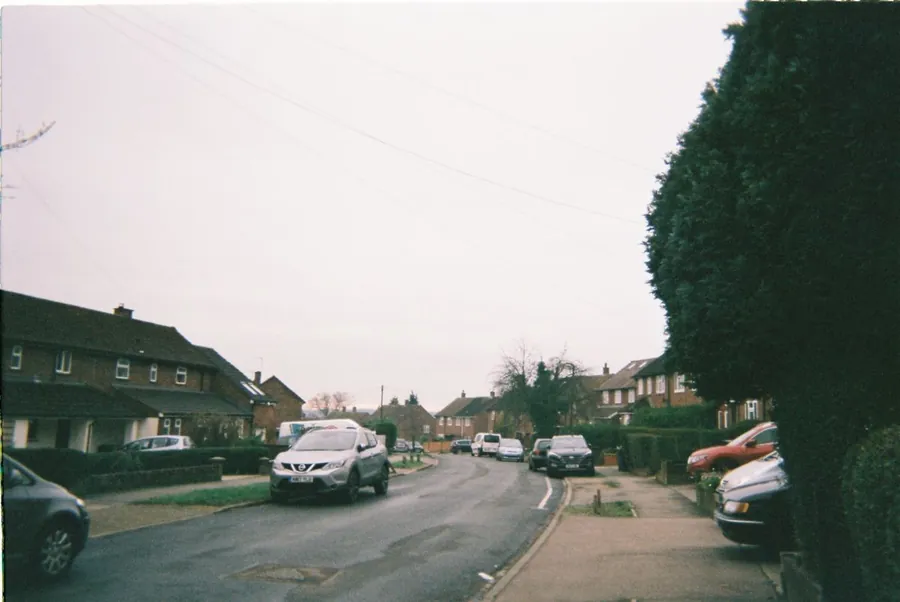
What makes this the borough’s most common visible fault is arithmetic. A two-bed terrace near West Croydon has perhaps seven metres of ridge. A hipped 1930s semi has eight or nine metres of ridge plus two hips running down to the eaves, so closer to twenty metres of bedding, all of it exposed on the highest and windiest part of the building. Multiply that by streets of near-identical houses built in the same decade by the same firms, and you get a fault that arrives everywhere at roughly the same time. It sits alongside slipped tiles and failed flashings in the short list of roof problems we are called out to most, and unlike a leak, it usually announces itself long before water gets in.
The verge is worse in one respect. Nobody looks at it. A ridge is silhouetted against the sky and a missing piece shows up. The mortar down a gable edge can crumble away for three or four years while the household looks straight past it on the way to the car.
Why Croydon’s builders bedded the ridge in mortar at all
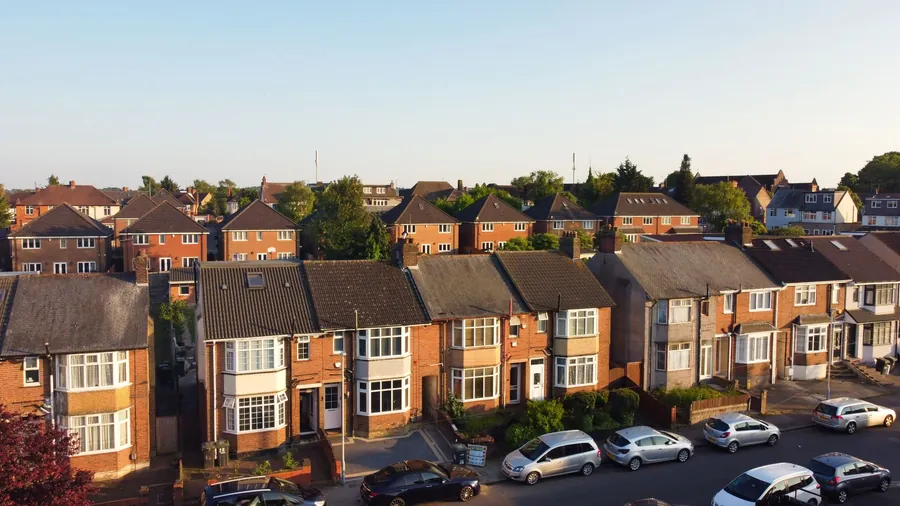
It helps to know there was no alternative. When the borough’s big interwar estates went up, mortar was how a roof was finished, full stop. The speculative builders who filled in Shirley, Sanderstead, Purley and the long roads out towards Selsdon between the wars were working with sand, cement, lime and a trowel. Plastic clips and screwed ridge battens did not exist in any usable form until the 1980s, and did not become normal until much later than that.
The method was sound on its own terms. A gauged mix, properly compacted onto a bed of tile slips, with the cross joints between ridge tiles filled solid, will hold for decades. Plenty of Croydon roofs have original bedding from the 1930s still clinging on in sheltered spots. The catch is that the same roof has usually been rebedded once already, somewhere in the 1970s or 80s, often by someone in more of a hurry than the original bricklayer.
That second generation of work is what most of the borough is living with now. Forty-odd years old, done at a time when a bag of cement was cheap and a strong mix was assumed to be a good mix, and with none of the mechanical fixing that is standard today.
What pulls the bed apart: heat, frost and a roof that never sits still
A roof is never still. Tiles expand along the slope when the sun hits them and shrink back overnight, the timber underneath swells and dries with the seasons, and the wall that carries the gable moves slightly with the ground it stands on. Mortar has almost no give in it at all. Everything the roof does, the bedding has to absorb, and it absorbs it by cracking.
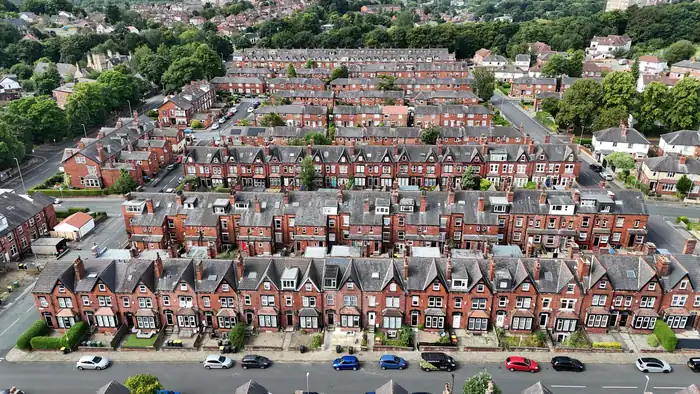
Croydon gets a harder version of this than most of the country. The borough is part of a built-up corridor running unbroken up to central London, and dense brick and tarmac hold heat overnight rather than shedding it, so the daily swing at roof level is wider and lasts longer into the evening than it would on the coast. A dark concrete tile in direct July sun reaches surface temperatures far above the air temperature around it, and the summer of 2022, when London went past 40 degrees for the first time, put a season’s worth of movement through a lot of roofs in a fortnight. Then winter does the other half of the job. Water gets into a hairline crack, freezes, opens it slightly, and thaws. Twenty cycles of that and the hairline is a gap.
Ground conditions add a little more. The north of the borough sits on London Clay, which shrinks in a dry summer and swells again in winter, while the land rises onto the chalk of the North Downs towards Purley, Sanderstead and Kenley. Clay ground moves more than chalk does, and a gable wall that moves takes its rigid verge bedding with it. It is not subsidence, just the small seasonal shifting every clay-founded house does, and it is enough to open a joint that was already tired.
The mixes that fail early, and the repair that hides the problem
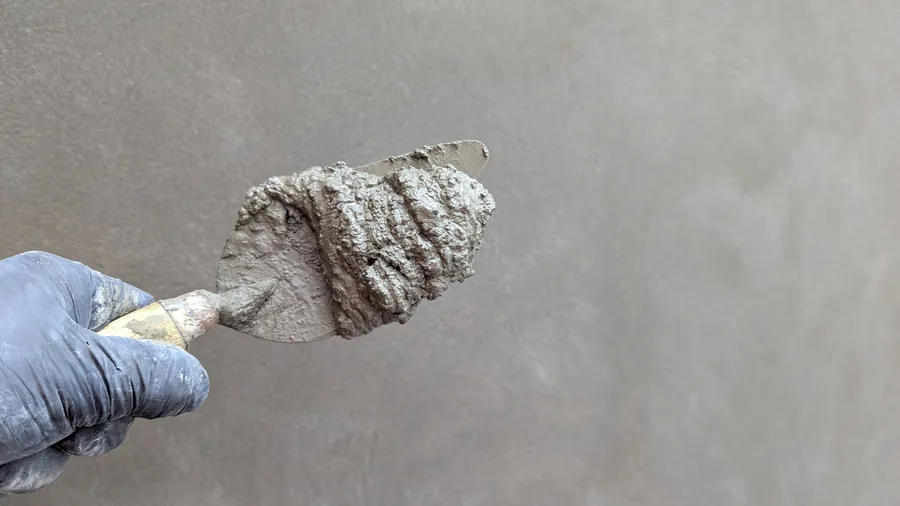
Not all bedding fails at the same rate, and the difference is almost always the mix. Too much cement gives you a bed harder and more brittle than the tile it holds, which cracks in clean lines rather than flexing. Too much sand, or soft building sand instead of sharp, gives a bed that never develops strength and crumbles to grit under a thumbnail. Mortar laid on a hot day and not damped down goes off before it is properly tooled, and never bonds to the tile at all.
Then there is the repair that makes everything worse. A cracked ridge gets a skim of fresh mortar smeared over the outside of the old joint, which looks tidy from the pavement and does nothing, because the bed underneath is still broken and the new skim is now trapping water in the joint rather than shedding it. A good share of the ridge jobs we are called to have had exactly this done to them, usually by someone who knocked at the door and offered to sort it while they were working up the road.
There is a giveaway. If the ridge tiles have been pointed but the cross joints between them sound hollow when tapped, or you can see a colour change where old and new mortar meet, the roof got a tidy-up rather than a repair. The clock never actually got reset.
What a dry fix system actually is
Dry fix means the tiles are held by fixings rather than by adhesion. For a ridge, that means a timber batten running the length of the apex, held on brackets or straps screwed into the rafters, with a ventilated roll dressed over the top course of tiles on each side and clamped down under the ridge tiles. Each ridge tile is then screwed through a pre-formed hole into the batten, and a clip or union sits between neighbouring tiles to close the joint and lock them to each other. End caps finish the run.

A dry verge is simpler. Interlocking caps, made to suit the tile profile, slide over the tile ends at the gable and screw down into the batten ends, with a starter unit at the eaves and a matching piece where the verge meets the ridge. The mortar and the fibre cement undercloak come off, the batten ends get checked and cut back square, and the caps go on.
The ridge roll does a second job people tend not to expect. Most are designed to give the equivalent of a continuous five millimetre opening along the apex, which vents the top of the roof space. On a house where the loft has been insulated heavily at ceiling level and the eaves have been blocked by that insulation, high level ventilation is often the difference between a dry roof space in February and condensation dripping off the nail points. You get it as a side effect of a job you were doing anyway.
The standard that ended mortar-only fixing
The rules changed a little over a decade ago. The 2003 version of the British Standard covering slating and tiling was withdrawn on 1 February 2015 and replaced by a revision that no longer allows mortar to be the only thing restraining a tile. Ridge, hip and verge tiles now have to be mechanically fixed whether or not they are bedded, and a later amendment removed any reliance on mortar’s tensile strength when calculating wind uplift. The current version is BS 5534, the code of practice for slating and tiling, and any roofer working to it will mechanically fix your ridge as a matter of course.
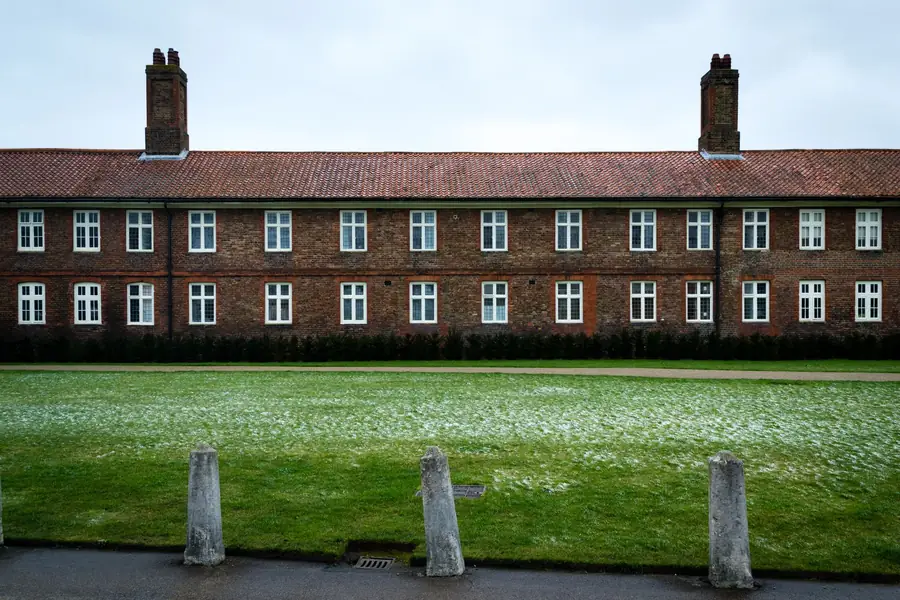
Two things follow, and they matter more than the standard itself. First, if your roof was covered before 2015, which covers the overwhelming majority of houses in the borough, its ridge is almost certainly held on by nothing but adhesion. Second, if anyone quotes you for a straight rebedding today with no fixings at all, they are quoting for something that has not been considered acceptable practice for over ten years.
You can still have mortar. Bedded and mechanically fixed is a legitimate specification, and it is what a sensitive period roof usually gets. What is no longer defensible is bedded alone.
Reading your own ridge and verge from the pavement
Pick a bright morning with low sun and stand far enough back to see the whole roofline against the sky. What you are looking for along the ridge is a line that is not straight. A tile sitting a few millimetres proud of its neighbours, or twisted slightly out of line, has lost its bed and is being held by friction and habit.
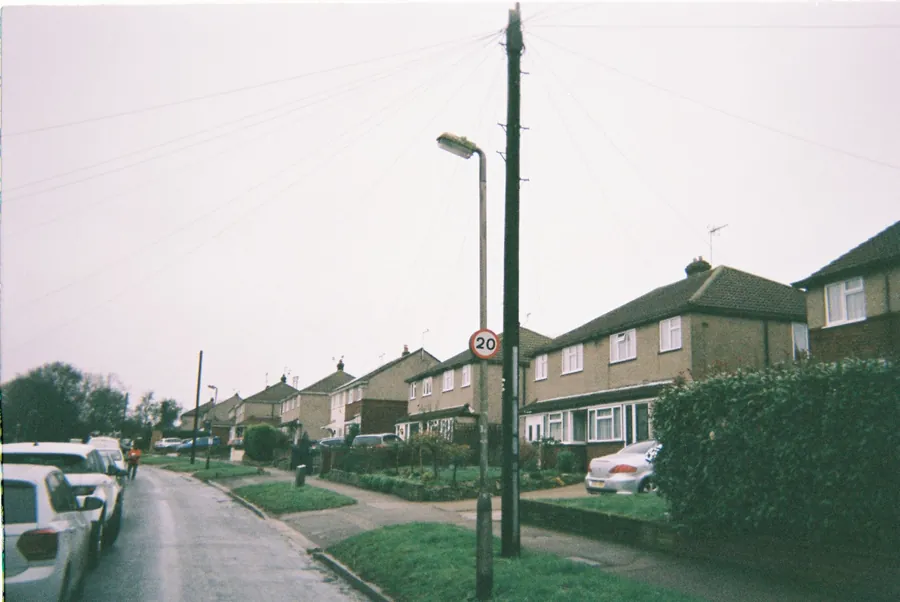
Then look at the joints. A sound bed reads as a continuous pale line under the cappings. A failed one shows dark shadow gaps, or sections where the line disappears entirely. At the gable, follow the mortar from the eaves up to the apex and look for missing lengths, for tile ends hanging over the bargeboard with daylight behind them, and for staining on the brickwork below, which means water has been running down the wall head rather than off the tile. Inside, the matching symptom is a damp patch in the top corner of a back bedroom that appears in wind-driven rain and dries out afterwards.
Finally, look down. Grit and grey fragments in the gutter, on the path or in the border below the gable come from one place. The same interwar roofs we wrote about in our guide to Croydon’s 1930s semis tend to show all of this at once, because the whole street was built and later rebedded within a few years of each other.
What it costs around Croydon, and when to do it
Converting a ridge line to dry fix on a typical two storey semi generally lands between £450 and £1,200, which is the same band as a straight rebedding, because the labour is similar and the material cost is modest. Where a job goes above that, it is length and shape doing it: a hipped roof with two hips to convert as well as the ridge is roughly twice the run, and a detached house or a long terrace section more again. Dry verge is cheaper per metre, and a single gable usually falls between £150 and £400 depending on the rake length and whether the batten ends need renewing.

Access is the line that moves the total, so ask for it as its own figure rather than folded into the labour. A ridge on a bungalow or a low rear slope may be reachable from a tower. A two storey elevation on a narrow Croydon road, where the scaffold has to be signed off and sometimes licensed to sit on the footway, runs £500 to £1,200 on its own. Let that shape the timing. If the gutters, the bargeboards or a slipped tile also want attention, do the lot on one visit rather than paying twice for the same scaffold. Our roof repair cost guide sets out the other jobs in the same way. The National Federation of Roofing Contractors’ guidance for homeowners is a sensible read before you choose between quotes, particularly on guarantees.
One caveat on appearance. Croydon has 21 conservation areas, and the council is explicit that alterations to a roof inside them need planning permission. On a Victorian terrace near the town centre, or in one of the older pockets out towards Addington and Coulsdon, a white plastic verge cap is not the right answer even where it would be perfectly sound. Bedded and mechanically fixed, in a mortar matched to the original, keeps the roofline looking as it should and still meets the standard. Everywhere else in the borough, dry fix is the version you never have to think about again.
Frequently asked questions
Is a dry ridge actually better than rebedding in mortar?
For almost every Croydon house, yes. A rebedded mortar ridge is a good repair that will want doing again in fifteen to twenty-five years, because the bed is still rigid and the roof underneath it still moves. A dry ridge holds each tile with a screw into a batten, so movement is taken up by the fixing rather than resisted by a lump of cement. The exception is a roof where the look matters more than the maintenance interval, which usually means a period property in one of the borough's conservation areas.
Do I need permission from Croydon Council to fit dry verge units?
Not for an ordinary house outside a designated area. Swapping failed mortar for a mechanically fixed system on a like-for-like roof is repair and maintenance, not development. Inside Croydon's conservation areas the position is different, because the council treats alterations to a roof as work that needs a planning application, and a white plastic verge cap on a period gable is a visible change. Ring the planning team before anyone orders materials if your street is designated.
Can dry verge be fitted to any roof?
Most tiled roofs, yes, but the units are made to suit specific tile profiles. A large interlocking concrete tile, a plain tile and a pantile all need different caps, and a roof with an unusual or long-discontinued profile sometimes has no matching unit at all. The other limit is the timber. If the batten ends and the undercloak at the gable have gone soft, they get cut back and renewed first, which is extra work rather than a reason not to do it.
How long should a dry fix system last?
Manufacturers generally warrant the components for somewhere between ten and fifteen years, and the aluminium and butyl ridge rolls in current use are expected to outlive that comfortably. The realistic answer is that it should see out the rest of the covering's life. On a roof with twenty or thirty years left in the tiles, fitting a dry ridge means you are unlikely to pay for that metre of roof again.
Why do I keep finding grey lumps in the gutter and on the path?
That is the bed under your ridge or hip tiles breaking up and washing out a piece at a time. It matters for two reasons. The tile above is losing the only thing holding it down, and the debris ends up in the gutter, where it settles into a layer that holds water against the fascia. Finding it after a windy week is worth a look up at the roofline the same day.
Free roof survey and a fixed written quote
Anywhere in Croydon and the surrounding CR postcodes. No call-out fee.