
23 August 2026
Repair Or Replace? Is Your Croydon Roof Actually Finished?
Most roofs condemned as beyond repair have years left in them. How to tell a roof that needs a day's work from one that is genuinely finished.
Nearly every roofer will tell you that most roofs they are asked to replace do not need replacing. That is not modesty, it is arithmetic: a replacement is the largest single sum most people ever spend on the outside of their house, and it is also the easiest thing in the trade to sell, because the customer cannot see the evidence either way. So the useful question is not whether your roof looks tired. It is whether it has actually failed. This piece sets out the difference, with the specifics that apply in Croydon - a borough where roofs vary enormously between the Victorian slate at the Thornton Heath end and the interwar concrete tile up on the chalk at Sanderstead and Kenley, and where the honest answer differs accordingly.
The one sign that genuinely means replacement
If you take one thing from this, take this. When slates start sliding off your roof with no wind, no storm and nothing else to explain it, the roof is telling you that its fixings have gone. The trade calls it nail sickness, and it is the clearest genuine case for replacement there is.
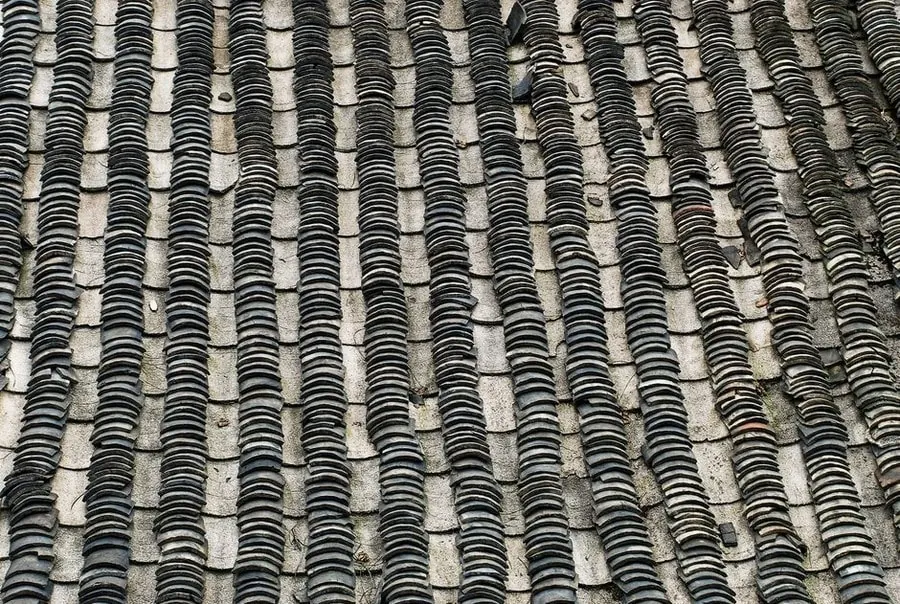
What happens is that the nails holding each slate corrode through over decades. Once that process has run across a slope, every slate up there is being held by friction and by its neighbours rather than by anything positive. Replacing individual slates does nothing, because the ones you are not replacing are all at the same stage. You are not fixing a fault, you are queueing.
This is overwhelmingly a north-of-the-borough problem, because that is where the Victorian and Edwardian stock is. Addiscombe, South Norwood, Thornton Heath and the older parts of South Croydon have terraces of exactly the right age for it. The slate itself is often perfectly sound - Welsh slate can last a century or more - which is why reclaimed slate has a market. It is the ironwork that fails first.
Signs that look alarming and usually are not
Moss is the great false alarm. It is dark, it is visible from the pavement, it photographs beautifully for a doorstep salesman, and it very rarely causes leaks. What it actually does is shed into gutters and block them, and hold moisture against the covering on shaded slopes.
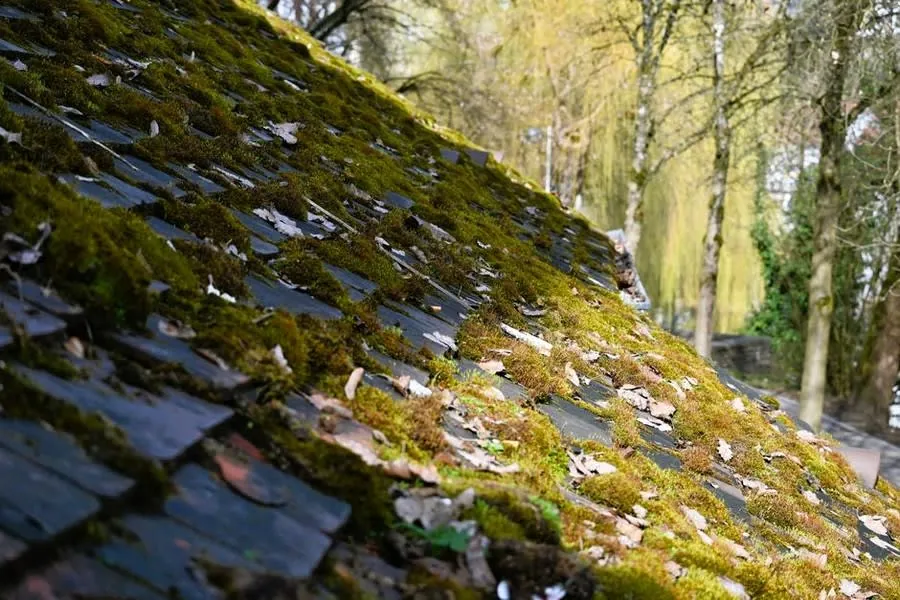
Croydon has more of it than most boroughs because it has a great deal of tree cover. The council looks after somewhere around 33,000 street trees, and Shirley, Selsdon, Purley and West Wickham run up into serious mature planting. North-facing slopes under that canopy will moss up whatever you do.
Clearing it is sensible maintenance. Replacing a roof over it is not. Be wary of any quote that leads with photographs of it.
The other false alarm is simply looking old. A concrete tile roof loses its surface finish long before it loses its integrity, so a 1950s roof in Coulsdon can look thoroughly weathered and still be structurally fine. Discolouration is not failure. Spalling - where the tile is visibly delaminating and shedding material - is, and the two are easy to tell apart at close range even though they look similar from the ground.
What is happening underneath matters more
The covering is the part everyone looks at, and it is often not the part that decides the question. Battens, felt and rafters are what actually hold a roof together, and they are only inspectable from inside.
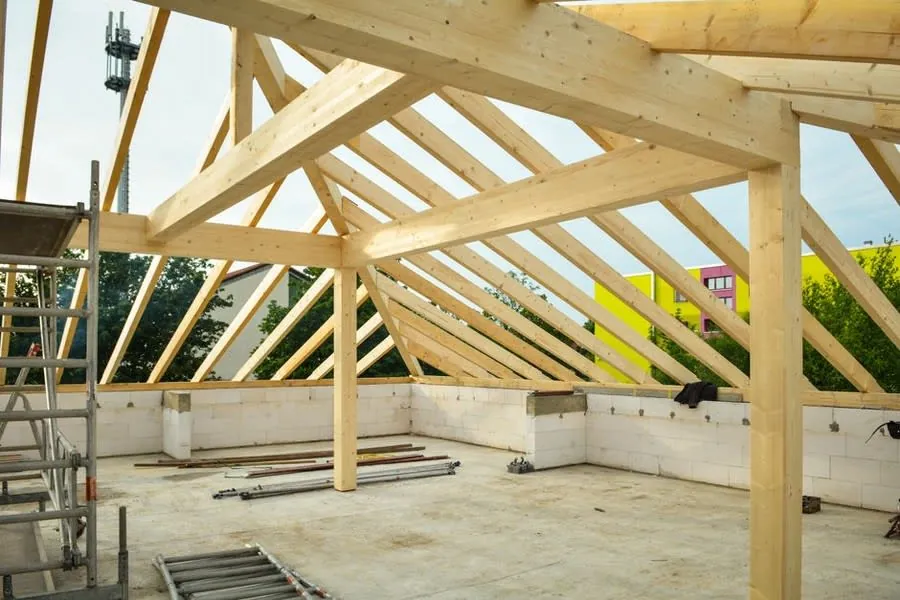
If the battens have gone soft, no amount of good covering laid over them will stay put, because there is nothing solid to nail into. If rafters have rotted where water has been running for years, that is a structural repair rather than a roofing one, and it needs establishing before anyone prices a covering. And if the sarking felt below the tiles has perished into strips, the roof has lost its second line of defence even though it looks intact from outside. All of which is why a quote produced without anyone going into the loft is not worth much. It is also why an honest quote states what has been assumed about the condition underneath and what happens if that assumption turns out to be wrong, rather than leaving it as an open-ended risk that surfaces on day two.
Do the arithmetic on repeated repairs
There is a point at which repairing stops making sense, and it is not usually dramatic. It arrives quietly, as a fourth invoice in five years for a different part of the same roof.

The way to think about it is cost per year of remaining life. A four hundred pound repair that buys fifteen years is excellent value. The same four hundred pounds on a roof that will need the same again next winter is not. Once you have paid three or four times, the running total is approaching what one proper job would have cost, and you have had the disruption three or four times over.
Access sharpens this considerably. On many Croydon roofs, getting somebody safely up to the work costs more than the work itself, particularly on the taller Victorian frontages in South Croydon and along the Brighton Road. Paying for scaffold repeatedly to do small jobs is the most expensive way to own a roof. If your stack is borderline and scaffold is going up anyway, that is the moment to deal with it. Our roof repair cost guide sets out realistic bands for both routes so you can compare properly.
Insulation and ventilation change the sums
If a full replacement is genuinely on the table, it brings something with it that a repair never does: the chance to fix everything above the ceiling at once. That is worth factoring in, because it partly offsets the cost.
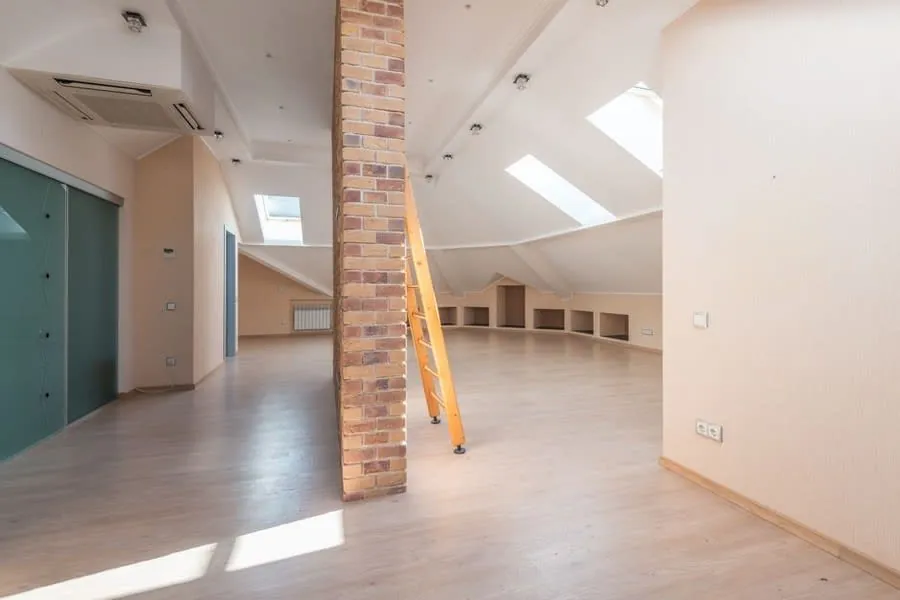
Renewing more than about a quarter of a roof’s area is normally notifiable work, because a roof counts as a thermal element under Approved Document L. In practice that means insulation and ventilation get brought up to current standards as part of the job whether you were planning it or not.
The ventilation half of that is more valuable than people expect. A great many Croydon lofts have condensation problems caused by eaves ventilation being sealed up when uPVC soffits were fitted in the 1990s and 2000s, and that gets mistaken for a leak constantly. A replacement designed with proper airflow at the eaves and the ridge solves a problem the old roof had for years. Our page on fascias and soffits explains why that airflow matters.
What is normal for your part of the borough
Age expectations depend entirely on what your roof is made of, and in Croydon that correlates closely with where you live.
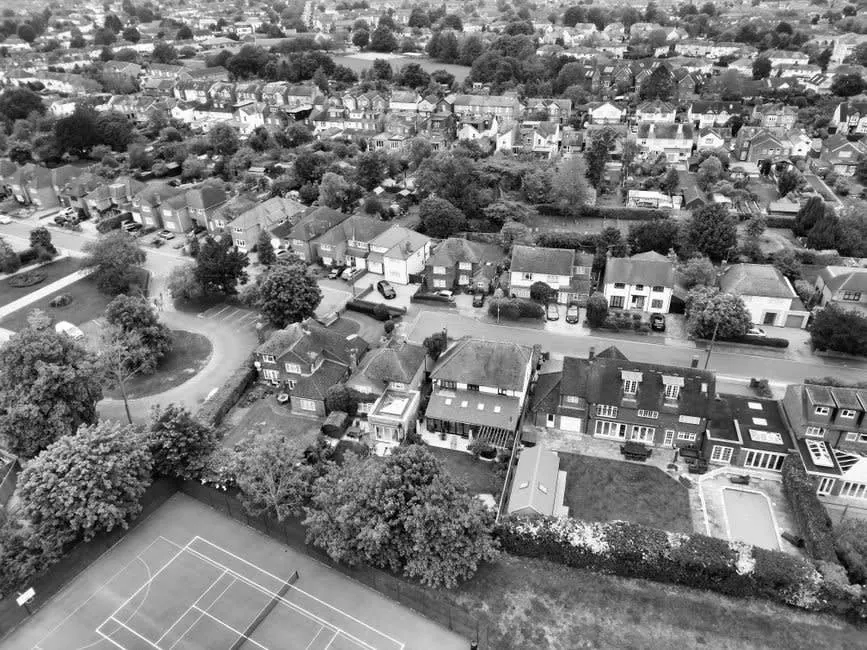
Natural slate on the Victorian terraces can run 80 to 100 years or more, with the fixings the limiting factor rather than the material. Concrete tile on the interwar semis across Shirley, Selsdon, Sanderstead, Coulsdon and Purley typically gives 50 to 60 years, which means a great many of those roofs are now at or approaching the end of a first covering. Flat roofs are shorter: around 20 years for good three layer felt, 30 or more for EPDM rubber, and in every case the falls matter more than the material, because nothing survives standing water.
The exposed south of the borough works its roofs harder than the low ground does. New Addington has been nicknamed Little Siberia since it was built in the 1930s because it genuinely runs colder than the rest of Croydon, and more frost cycles a winter means more freeze-thaw damage to mortar bedding and to any tile that has started to spall. None of that changes what a roof is made of. It does mean the same covering reaches the end of its life a little sooner up there than it does in Thornton Heath.
If you are not sure which category yours falls into, that is exactly what a free survey is for - including the ones that end with being told to come back in five years.
Frequently asked questions
How do I know if I need a new roof or just a repair?
The strongest single indicator that a roof is genuinely finished is slates or tiles coming off with no weather to explain it, which means the fixings have corroded across the whole slope. Widespread frost damage to the tiles themselves, rot in the battens or rafters, and a pattern of repeated repairs in different places all point the same way. Individual slipped tiles, moss growth and a generally weathered appearance do not.
How long does a roof last in Croydon?
Natural slate, common on the Victorian terraces in the north of the borough, can last 80 to 100 years or more, though the nails usually fail long before the slate does. Concrete tile, which covers most of the interwar stock in Shirley, Selsdon, Sanderstead and Coulsdon, typically runs 50 to 60 years. A well laid felt flat roof gives around 20 years and EPDM rubber is commonly quoted at 30 or more.
Is it cheaper to repair a roof several times than replace it?
Usually yes, until it is not. A targeted repair on a sound roof is money well spent. Once you have paid for three or four repairs in different places within a few years, the running total starts to approach the cost of doing the job once properly, and the arithmetic is worth doing honestly rather than emotionally.
Does a new roof add value to a house?
It rarely adds its own cost in value, but a visibly failing roof reduces what buyers will offer and can hold up a mortgage valuation or come back at survey. Think of it as protecting value rather than adding it, which is also why doing it properly with matched materials matters more than doing it cheaply.
Free roof survey and a fixed written quote
Anywhere in Croydon and the surrounding CR postcodes. No call-out fee.