
21 September 2026
Emergency Roof Repairs In Croydon: What To Do In The First Hour
Water through a Croydon ceiling? What to do in the first hour, what an out-of-hours callout really costs, and when a temporary fix is enough.
Roofing emergencies in Croydon do not spread themselves evenly through the year. They arrive in clusters, in the hours after a gale or during the first properly heavy rain following a dry spell, and the phones all ring at once. That is the moment when homeowners make expensive decisions quickly. A standard emergency callout fee sits somewhere around £150 to £300 before anyone has touched the roof, out-of-hours hourly rates run roughly double the daytime figure, and a temporary cover that should last weeks is routinely left in place for months. Meanwhile the borough’s own geography complicates things: 21 conservation areas, four separate planning authorities across the CR postcodes, and a large stock of converted flats where the roof is not legally yours to fix. This is what the first hour should look like, what it should cost, and how to tell a genuine make-safe from a stalling one.
Watch: buckets, the fuse box and the phone call, in the order they matter.
The first hour: electrics, people, then water
The order matters more than the speed. Before anyone worries about the roof, deal with electricity, because water finds cabling in a loft long before it finds the middle of the ceiling. If the leak is anywhere near a light fitting, a downlighter or a run of cable, switch off the circuits covering that room at the consumer unit. If you cannot tell which breaker covers which room, pull the main switch and use torches. Electrical Safety First’s home safety guidance is worth reading before you need it rather than by torchlight, and the rule it comes down to is simple: if in doubt, off.
Then move people and possessions out of the room below, not just away from the drip. Water travels along joists and reappears two metres from where it entered, so the safe zone is the whole ceiling, not the wet patch. Lift what you can, and put a plastic sheet over the rest rather than dragging a sofa through a doorway in the dark.
Only then start catching water, and catch it wide. A washing-up bowl under a drip that keeps moving is useless; a decorating dust sheet funnelled into a bucket is not. Photograph everything before you touch the roof - on a phone, with the timestamps intact - and then make the call. If this is happening right now, our emergency roof repairs page sets out what a same-day make-safe involves and what it deliberately leaves until daylight.
Why putting a hole in your own ceiling is the right call
Nobody wants to be told to damage their own house. Do it anyway, if the ceiling is bulging. A sagging patch of plasterboard is a bag holding water, and water is heavier than people picture: twenty litres up there weighs twenty kilos, pressing down on a 12.5mm board that weighs under ten kilos per square metre by itself. Boards do not fail gradually. They let go as a sheet, usually taking the light fitting, the coving and the paint with them.
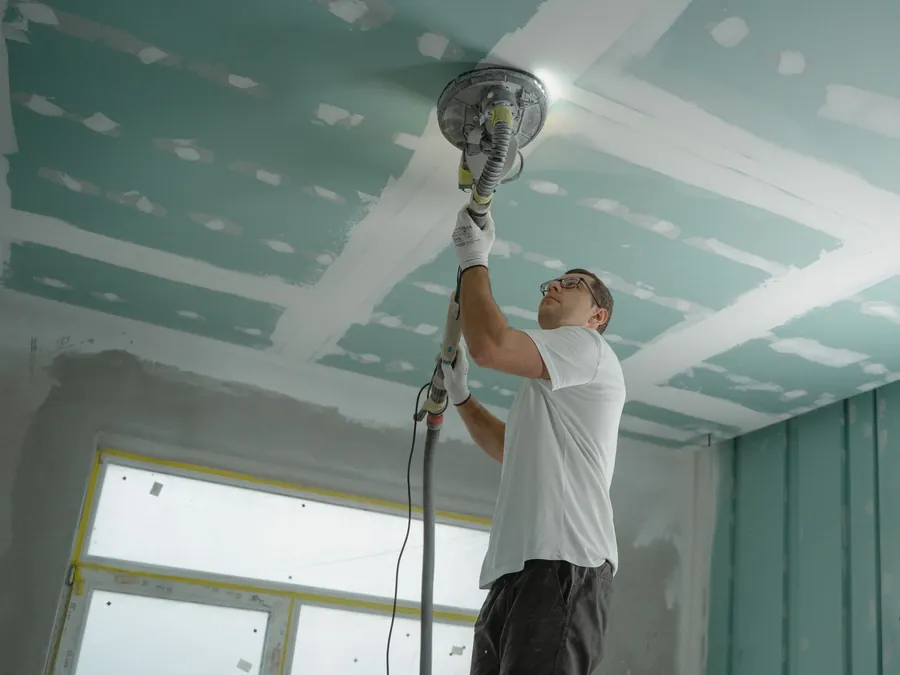
The controlled version is undramatic. Confirm the circuit is off, put a bucket and something wide underneath, stand to the side rather than beneath, and push a screwdriver through the lowest point of the bulge. It will run hard for a minute and then slow. If the bulge is large, two small holes drain it faster and more predictably than one big one.
The difference in cost is the whole argument. A pierced ceiling is a patch and a repaint, done in an afternoon by a plasterer who has seen a hundred of them. A collapsed one in a Croydon semi means the full board out, a new skim, a fortnight of drying before anyone can decorate, and usually a soaked light fitting that has to be replaced whatever it looks like. Most people who have watched a ceiling come down do not hesitate the second time.
What an out-of-hours callout actually costs around south London
Price guides across the trade put emergency callout fees in the region of £150 to £300 before any work is carried out, with out-of-hours labour at roughly £60 to £100 an hour against a daytime rate closer to £25 to £45. London tends to sit at the top of those bands and can exceed them, and the all-in figure for a make-safe visit usually falls somewhere between £250 and £800 plus VAT once access and materials are counted. Those are guide numbers rather than a survey, but the shape of them holds: the premium for darkness and short notice is commonly 50 to 100 per cent.

So the question at eleven at night is whether this actually has to happen at eleven at night. If water is coming into the building, yes. If a tile came off in a gust, the loft is dry, and the forecast is clear until Thursday, you are paying a premium for peace of mind rather than for protection. The same job booked for Tuesday morning can come in at half.
Access is the other multiplier, and Croydon supplies plenty of it. A two-storey interwar semi off the Brighton Road with a clear side return is a ladder job. A third-floor conversion flat on a Victorian terrace with no rear access, or a block where the only way up is through a communal roof hatch, can turn a ninety-minute repair into a scaffold conversation. Anyone quoting over the phone without asking how the roof is reached is guessing.
Sheeting and tarpaulins: what temporary should actually mean
A make-safe is not a repair and should never be sold as one. Done properly it means a heavy-duty reinforced sheet, run well past the damage in every direction, fixed with timber battens screwed through into sound substrate and dressed over a ridge or under a course so that wind cannot get beneath the leading edge. Done badly it means a builder’s tarpaulin held down with four paving slabs, which will be in a neighbour’s garden by the first proper gust.
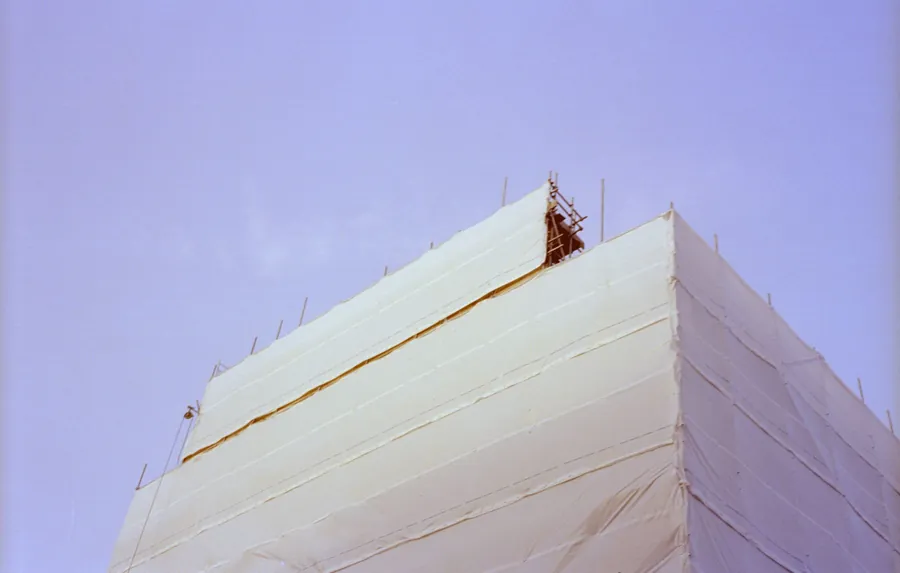
Even a good cover has a clock on it. A standard polyethylene sheet stiffens and starts to tear in UV within a few weeks; the ninety-day figure quoted across the trade is an outside limit for a decent reinforced cover, not a target. In practice, a sheet over a Croydon roof through a wet autumn is doing well to reach two months without needing re-tensioning, because it collects water in any dip and a pooled tarpaulin is heavy enough to pull its own fixings.
There is a Croydon wrinkle here worth knowing about before the permanent repair is specified. Emergency covering is not an alteration and needs no permission anywhere in the borough, so nobody should be hesitating over paperwork while the rain is coming in. Re-covering a slope in a different material afterwards is another matter entirely. In the Chatsworth Road conservation area in Addiscombe, an Article 4 direction that has been in force since January 2016 removes permitted development rights for all alterations to the roof of a dwelling house, and there are several more of these scattered around the borough.
When a temporary fix is honest, and when it is stalling
There are good reasons to stop at a make-safe. Wet slate and wet felt are dangerous to work on, mortar will not go off properly in the cold and damp, and matching a tile from a 1930s roof means finding a merchant with reclaimed stock rather than whatever is on the van. A roofer who says the covering is too wet to repair tonight and books you in for Thursday is being straight with you.
The tell is what happens next. An honest temporary fix comes with three things before the van leaves: a written note of what has failed, a date for the permanent repair, and a price for it. A stalling one comes with none of them and a suggestion that you “see how it goes”. If you are being told to wait for a dry spell, ask which spell, and get it in the diary.
Be suspicious too of the opposite move, where a single slipped tile becomes a full re-roof quoted on the spot in the dark. Nobody can assess a roof properly by torchlight in the rain. Diagnosis happens in daylight. If a quote for thousands arrives before anyone has seen the roof dry, it is a sales call, not a survey - and our guide to choosing a roofer in Croydon without getting stung covers the rest of the warning signs.
What your insurer expects while the water is still coming in
Every buildings policy carries a duty to mitigate: you are expected to take reasonable steps to stop the damage getting worse rather than watch it spread and send the bill. That is why the emergency work usually gets paid, and why an untouched roof three days later can weaken a claim. Citizens Advice’s guidance on making an insurance claim sets out how the process runs and what evidence you are expected to hold.

In practice it comes down to photographing the damage before the make-safe rather than after, including whatever came off the roof and where it landed in the garden. Keep the emergency invoice separate from the invoice for the permanent repair, because insurers treat the two differently and a single combined bill invites questions that slow everything down. Broken tiles, split lead and rotten timber are worth keeping in a corner of the garage until the claim settles. They are the evidence of what failed, and once they are in a skip the argument becomes your word against an assessor’s.
Whether to claim at all is a separate calculation involving your excess and what a claim does to the next few years of premiums, and we have worked through that in detail in our piece on deciding between an insurance claim and paying the roofer. None of that has to be settled tonight. The evidence does.
Flats, freeholders and whose emergency it actually is
A large share of Croydon’s emergency calls come from buildings where the caller does not own the roof. Purpose-built blocks around the town centre, converted Victorian houses across South Norwood and Thornton Heath, maisonettes on the postwar estates - in most of them the structure and exterior sit with the freeholder, and the top-floor flat simply gets the water.
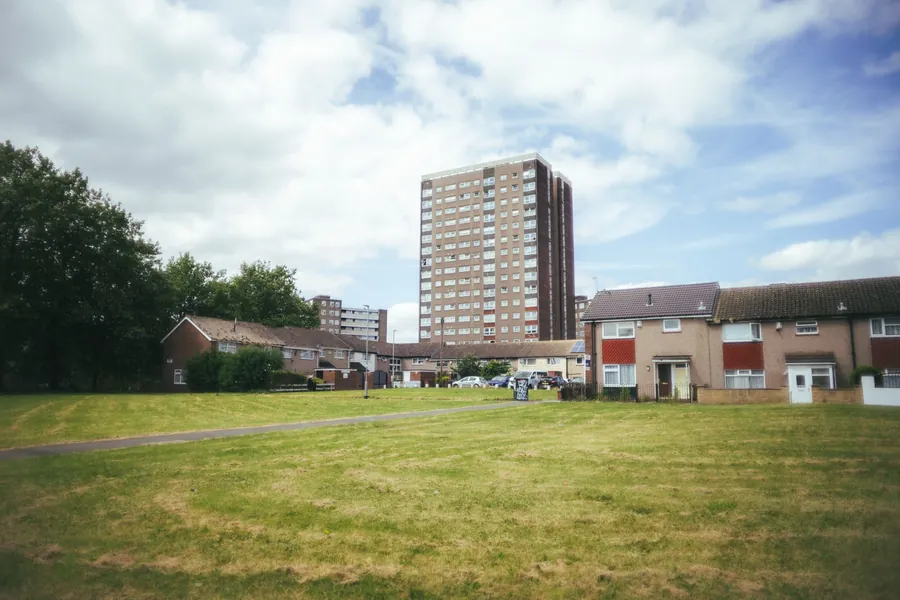
Report it to the freeholder or managing agent in writing the same day and keep the reference. Ring the out-of-hours number if there is one. A leaseholder who instructs their own roofer without telling anybody can end up personally liable for a bill that was never theirs, and the £250 Section 20 threshold sits behind the whole question of what gets recovered from whom. The detail is in our guide to who pays for roof repairs in a Croydon converted flat.
Council and housing association tenants have a different and faster route, with statutory repair obligations and target response times for genuine emergencies - the government’s guidance on council housing repairs sets out how that works. In every one of these cases, protecting the inside of your own home is still your job, and nobody will reimburse the carpet you did not move.
The doorstep after a gale, and what “made safe” should mean
Every serious blow through south London is followed within a day or two by knocks on doors, usually from someone who “noticed a problem with your roof while working next door”. Sometimes it is genuine. Often it is not, and the pattern is consistent: cash preferred, work starting immediately, a price that climbs once the ladder is up, and no written anything. Croydon’s interwar semis are a favourite target because the hipped roofs and chimney stacks are easy to point at from the pavement and impossible to check from a bedroom window.
Two questions sort it quickly. Ask for the company name and address, then say you will call back once you have checked them. Nobody with a real business objects to that. Anyone who needs an answer now, while they happen to have the ladder on the van, is telling you what they are. Report doorstep pressure selling through your local trading standards office rather than just closing the door, because the same crews work whole streets.
Finally, know what you are signing for. “Made safe” should mean the water has stopped entering, nothing loose is left on the roof that could fall onto a pavement or a car, the cover is fixed rather than weighted, any live circuit near the leak has been isolated, and you have been shown photographs of what failed. If someone leaves without covering all five, the job was not finished - it was just ended.
Frequently asked questions
Should I turn the electricity off if water is coming through the ceiling?
Turn off the affected circuits at the consumer unit if water is anywhere near a light fitting, a downlighter or a loft cable, and turn off the main switch if you are not sure which circuit covers that room. Water tracks along cables and pools inside ceiling roses, so a fitting that looks dry can still be live and wet inside. Leave it off until an electrician has looked, and never test it by flicking the switch.
Is it really sensible to make a hole in my own ceiling?
If the ceiling is bulging, yes. A sagging patch is holding water above the plasterboard, and twenty litres sitting up there weighs twenty kilos. Letting it down through one small hole over a bucket costs you a patch repair. Letting it choose its own moment costs you the whole board, the light fitting, and whatever is underneath. Use a screwdriver at the lowest point of the bulge, stand to one side, and put something wide under it first.
What does an emergency roofer charge out of hours in south London?
Trade price guides put UK emergency callout fees at roughly £150 to £300 before any work, with out-of-hours hourly rates of about £60 to £100 and London often sitting at the top of that or beyond. A typical make-safe visit lands somewhere between £250 and £800 plus VAT depending on access and what has failed. Daytime, the same work is frequently half that, which is worth remembering at eleven at night when nothing is actually coming in.
How long should a tarpaulin stay on a Croydon roof?
Weeks, not months. A standard polyethylene sheet starts going brittle in UV within a few weeks, and ninety days is the outside figure the trade uses even for a heavy-duty reinforced cover that has been properly battened rather than weighted with bricks. If sheeting has been up since before Christmas and nobody has given you a date for the permanent repair, the temporary fix has quietly become the repair.
Who do I call if the roof belongs to a freeholder or a housing association?
Report it to them first, in writing, the same day, and keep the reference number. A leaseholder who commissions their own emergency roofer without telling the freeholder can end up paying for it personally even when the roof was clearly the freeholder's responsibility. Council and housing association tenants have a statutory repairs route with response targets for emergencies. Protecting your own belongings and stopping the water inside your flat is always yours to do in the meantime.
Free roof survey and a fixed written quote
Anywhere in Croydon and the surrounding CR postcodes. No call-out fee.