
18 October 2026
Flat Roof Repair And Replacement Costs In Croydon: What Each Job Really Costs In 2026
Flat roof prices in Croydon for patch repairs, torch-on felt, EPDM and GRP on extensions, garages, dormers and back additions, plus the access, skip and Part L costs quotes leave out.
Most flat roofs in Croydon sit at the back of the house, where nobody sees them from the street until a ceiling stain appears over the kitchen. That is partly why they get ignored for so long, and partly why the quotes come as a shock. A small repair to a sound flat roof generally costs £250 to £700. A full strip and renewal on a typical 12 to 20 square metre rear extension is more often £1,800 to £4,500, and a big roof over a pair of maisonettes can reach £9,000. Where your job lands in those ranges has less to do with the material than with three Croydon-specific things: how the old roof gets out of a terraced house with no side access, whether the skip can go on the road, and whether replacing the roof triggers an insulation upgrade. This guide prices each kind of flat roof job across the borough, says what pushes the number up, and tells you when a repair is the better buy.
Flat roof prices in Croydon by job
These are guide figures for 2026, based on the jobs we price across the borough. A quote that comes in below them is not necessarily a bargain, and one well above them should explain itself.
| Job | Typical Croydon price |
|---|---|
| Patch repair to a split, blister or lifted edge | £250 - £700 |
| Liquid coating over sound felt | roughly £45 - £75 per m² |
| Re-felt with torch-on, 15 m² extension | £1,500 - £2,800 |
| EPDM rubber on a new deck, 15 m² | £1,800 - £3,200 |
| GRP fibreglass on a new deck, 15 m² | £2,000 - £3,600 |
| Single garage, strip and re-cover | £1,400 - £2,600 |
| Dormer flat top, including scaffold | £1,800 - £3,800 |
| Large maisonette roof, 40 - 60 m² | £5,000 - £9,000 |
Every figure assumes the timber deck underneath is either sound or being replaced as part of the price. If you want to talk through a specific roof, our flat roof repair service in Croydon starts with someone going up, not a figure over the phone.
Patch repairs: the cheapest fix, when the roof deserves it
A patch is worth paying for when one thing has failed on a roof that is otherwise behaving. The typical cases are a seam that has opened where two sheets of felt overlap, a blister that has finally split, or the edge where the roof meets the house wall pulling away. In each of those the repair is a few hours’ work and the £250 to £700 band covers it, with the top end reserved for awkward heights.

The trap is paying for the same patch twice. If the felt is crazed all over, if water sits in one spot for days after rain, or if the surface feels spongy underfoot, the patch is going onto a roof that is failing everywhere at once. You can usually tell by asking how many repairs it has had already. A second patch inside two years is a sign to stop.
Liquid coatings sit in between. Rolled over a sound but tired felt roof, a decent cold-applied system can buy several years. Rolled over wet insulation or a soft deck, it seals the problem in, and the roof often rots faster underneath.
Torch-on felt: still the most common re-cover in Croydon
Modern torch-on is not the felt your parents’ garage had. A proper system is two or three layers of reinforced bitumen membrane, heat-welded to each other and to the deck, with a mineral cap sheet on top that takes the sun. Done well, it lasts twenty years or more and copes with foot traffic better than rubber does.

On a 15 square metre kitchen extension with a deck that can stay, a torch-on re-felt usually comes to £1,500 to £2,800. The spread is mostly about detail work. A plain rectangle with one outlet is quick. A roof with a lantern, two soil pipes coming through it and an abutment along a party wall takes longer to dress, and those details are where flat roofs leak.
Ask whether the price is for a single-layer or multi-layer system, and which cap sheet. Some cheap quotes are for one layer of torch-on straight over the old felt. That is a recover, not a replacement, and should be priced like one.
EPDM and GRP: what the two modern options cost
Most of the replacement roofs we fit on Croydon extensions are now EPDM, a synthetic rubber membrane laid as one sheet with no seams in the middle of the roof. It goes on cold, which means no flame next to the timber fascia or the neighbour’s fence, and it copes with the movement you get on a timber-framed extension. Expect £1,800 to £3,200 for a typical 15 square metre roof with a new deck.
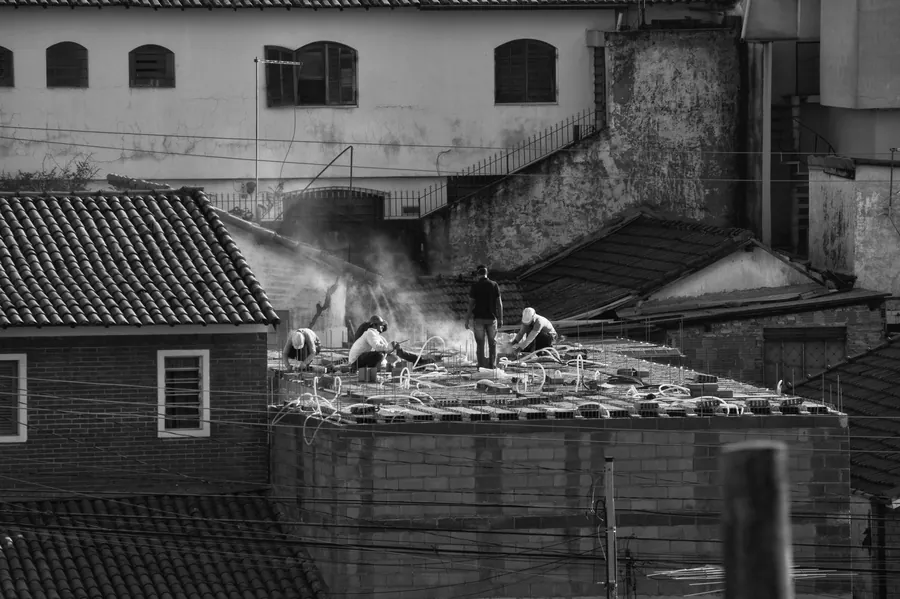
GRP, or fibreglass, is laid wet: resin and glass matting built up on a board deck, then a topcoat. The finish is hard and walkable, which makes it popular for roofs people will step out onto from a bedroom. It usually costs a few hundred pounds more than EPDM on the same roof, £2,000 to £3,600 at that size, partly because it cannot be laid in rain or cold and a Croydon November can hold a job up for days.
Which one to pick
For a roof nobody walks on, EPDM is the sensible default. For a roof that doubles as a small terrace or has lots of fiddly upstands, GRP’s moulded corners make sense. Torch-on suits a roof with plenty of penetrations and a contractor who does it well. Any of the three, fitted properly, will outlast a badly fitted version of the “best” one.
Garages, dormers, kitchen extensions and back additions
Where the roof sits changes the price as much as what it is made of.
Garages
Usually the cheapest flat roof to replace, as long as it is a proper timber deck and not asbestos cement sheeting. Lots of the detached garages behind 1930s semis in Shirley and Selsdon are easy to reach, and a full strip and re-cover usually sits at £1,400 to £2,600. If the roof is corrugated cement sheet from before 2000, it needs testing for asbestos first, and licensed removal adds to the bill.
Kitchen and rear extensions
The middle of the table. They are single-storey and you can reach them from the garden, but they usually butt up against the house wall, and that flashing has to be cut in properly or it will be the first thing to go.
Dormers
The flat tops on loft conversions across Thornton Heath, Norbury and South Norwood are small, often under 12 square metres, but they are two or three storeys up and need scaffold. That scaffold can be half the bill, which is why a tiny dormer roof can cost more than a garage twice its size.
Victorian back additions
Some of the rear wings on Addiscombe and Broad Green terraces have a flat or near-flat roof over the first floor bathroom. They are fiddly, with a shared boundary wall and often a soil pipe through the middle. Our guide to outrigger and back addition roofs covers the pitched versions of that wing, which fail in different ways.
Getting the old roof out of a terraced house
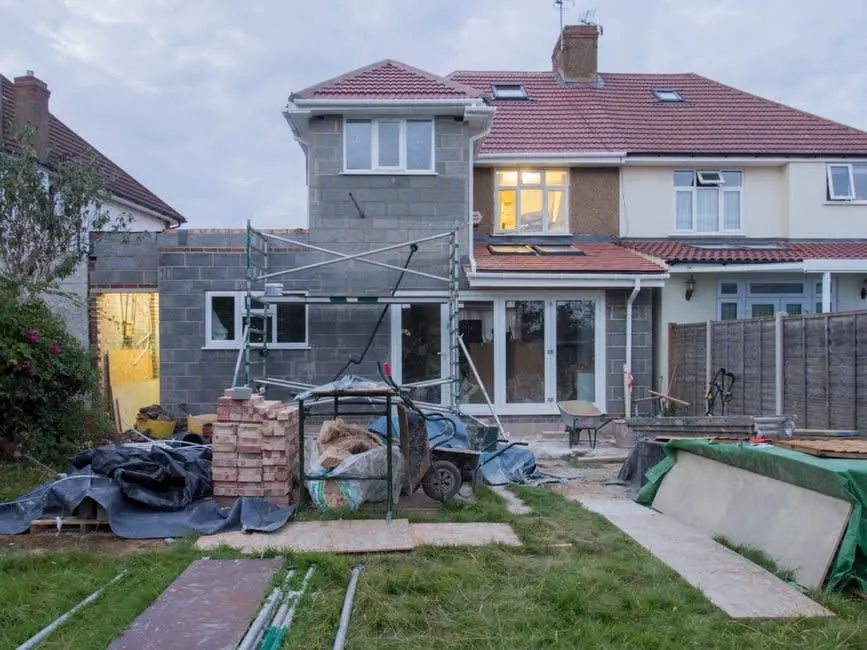
This is the cost that catches people out. A flat roof strip on a mid-terrace house with no side passage produces a tonne or more of old felt, chippings, rotten boards and insulation, and every bit of it has to go through your house to reach the street.
That means dust sheets and corridor protection down the hallway, bagging everything at the back, and carrying it through in rubble sacks. On a terrace it can add a day of labour, and £150 to £400 on the price, compared with a semi where a wheelbarrow goes round the side. Ask any roofer quoting for a terraced house how they plan to get the waste out. If they have not thought about it, the price has not either.
Then there is the skip. Croydon Council requires a permit for any builder’s skip placed on the road or pavement, and only the skip firm can apply, with at least five working days’ notice. In a controlled parking zone the skip also needs a bay suspension, and some roads, including the High Street and London Road, are restricted. The council’s skip operators permit guidance sets out the rules. A builder’s skip with permit in south London commonly costs £300 to £450 for the week, and where a skip will not fit at all, a wait-and-load grab or a man-and-van run is the alternative.
Insulation, Part L and the London premium
When more than half of a flat roof is stripped and renewed, the work counts as renovating a thermal element, and the roof normally has to be brought up to current insulation standards. The rules sit in Approved Document L on GOV.UK, and the work needs signing off either by a competent person scheme or through Croydon Council building control.
On most extensions that means a warm roof: rigid insulation boards laid on the deck, with the waterproof layer on top. It typically adds £35 to £60 per square metre, and it raises the roof by 100 to 150mm. That extra height has knock-on costs, because the fascia, the drip edge, any lantern kerb and the flashing into the house wall all have to come up with it. On a roof that already sits tight under a bedroom window sill, it can be a real design problem rather than a line item. The older, deeper version of this issue on 1960s flat-roofed homes is covered in our piece on Croydon’s flat-roofed houses and maisonettes.
Prices in Croydon also run above the national averages you see on comparison sites, often by 15 to 25 per cent. Labour, parking, ULEZ charges on older vans and the time spent carrying materials through houses all cost more in outer London than in Lincolnshire.
Repair or replace: doing the sums on a flat roof
The question is never really about the covering. It is about the deck under it.
If the boards are dry and firm, a repair or a recover can make sense, and spending £500 now for five more years is a good trade. If the deck is soft, black at the edges or sagging between joists, every pound spent on the surface is wasted, because the new layer has nothing solid to hold onto.
A rough rule we use: once you have spent around a third of the replacement price on repairs in five years, replacement is the cheaper option. A £400 patch every winter on a roof that would cost £2,500 to renew reaches that point fast. Age matters too. Felt roofs of 15 to 20 years are on borrowed time, however tidy they look from the bedroom window.
In practice it is often both. Patch it this winter, get a replacement priced, and book the work for spring when the weather suits it and the scaffold and skip can be arranged without a rush.
Frequently asked questions
How much does a flat roof repair cost in Croydon?
A one-off repair to a flat roof that is otherwise sound - a split seam, a blister that has opened, a lifted edge at the wall - usually costs £250 to £700 in Croydon. The figure moves with height and access more than with the size of the fault: a garage roof you can reach from a stepladder sits at the bottom of that band, and a dormer top three storeys up sits at the top of it.
Is EPDM or GRP cheaper for a flat roof replacement in Croydon?
EPDM normally comes out a little cheaper. On a typical 15 square metre rear extension we would expect EPDM on a new deck to land around £1,800 to £3,200 and GRP fibreglass around £2,000 to £3,600. GRP needs dry weather and time to cure, which in a Croydon winter can stretch the job, and that labour shows up in the price. Torch-on felt sits in a similar range to EPDM when it is a proper multi-layer system.
Do I need a skip permit for a flat roof job in Croydon?
If the skip goes on the road or pavement, yes. Croydon Council requires a permit for any builder's skip placed on the highway, and only the skip company can apply for it, with at least five working days' notice. In a controlled parking zone the skip also has to sit in a bay with a parking suspension arranged first. If the skip can go on your own driveway, no permit is needed.
Will replacing my flat roof mean adding insulation?
Usually, yes. Stripping and renewing more than half of a flat roof counts as renovating a thermal element under Part L of the Building Regulations, which normally means bringing it up to current insulation standards. On most Croydon extensions that means a warm-roof build-up with rigid insulation boards on top of the deck, which raises the roof by roughly 100 to 150mm and adds to the cost. Patch repairs and small sections do not trigger it.
Free roof survey and a fixed written quote
Anywhere in Croydon and the surrounding CR postcodes. No call-out fee.