
8 October 2026
Party Walls And Shared Roofs On Croydon Terraces And Semis
Share a roof with next door in Croydon? What the party wall in your loft should look like, leaks that cross the boundary, and when the Party Wall Act applies.
Most Croydon homeowners own a roof that does not stop where their house does. Walk along a road in Selhurst, Thornton Heath or Broad Green and the slates run unbroken from one end of the terrace to the other; go out to Shirley, Selsdon or Coulsdon and each pair of 1930s semis sits under one hipped roof with a single ridge. Most of the borough’s older houses are built this way, fixed to next door by a brick party wall that carries on up into the loft. That wall decides a lot: where a leak can travel, how quickly a loft fire spreads, and whether a roofing job needs a formal notice under the Party Wall etc. Act 1996, which has applied across England and Wales since 1997. Here is how the shared roof works, where it lets you down, and how to raise it with next door without a row.
Watch: where your half of a terrace or semi roof ends, and when next door has to be told.
Where your half of a shared Croydon roof stops
On paper, the dividing line is the centre of the party wall. Your half of the wall is yours, next door’s half is theirs, and the roof covering above it is split along the same line. In practice nobody built it that way. A Victorian roofer slating a row in South Norwood ran his battens straight across the top of the party wall from one house to the next, and the slates lap over the line without a break. On an interwar semi in Sanderstead the hip, the ridge and often the felt are one continuous piece of work shared by two households. That is why a fault on the boundary is rarely just your problem, and it’s why our roof leak repair visits on joined houses start with working out which side of the line the water is actually coming from.
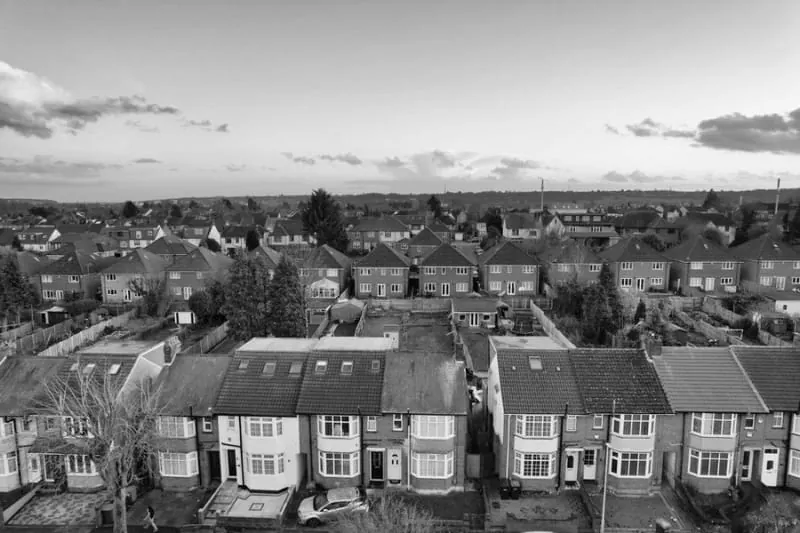
You can usually find the line from the street. On a terrace, look for the chimney stacks: on most Croydon rows they sit on the party walls, so the boundary runs through the middle of each stack. On semis, the line is normally under the centre of the ridge, or in line with the point where the two front doors or bays mirror each other. Your title plan from HM Land Registry will show the boundary, though at a scale that is no help at all on a roof.
Up in the loft: what the party wall should look like
Put your head through the hatch and look sideways. In a well-built house, the party wall carries on up through the loft as solid masonry and meets the underside of the slates or tiles, with the gap at the top sealed so that smoke and flame cannot pass over it. Today’s building regulations ask for exactly that on any wall separating two homes, and Approved Document B on fire safety describes how walls between dwellings should be carried up to the roof covering and fire-stopped where they meet it.
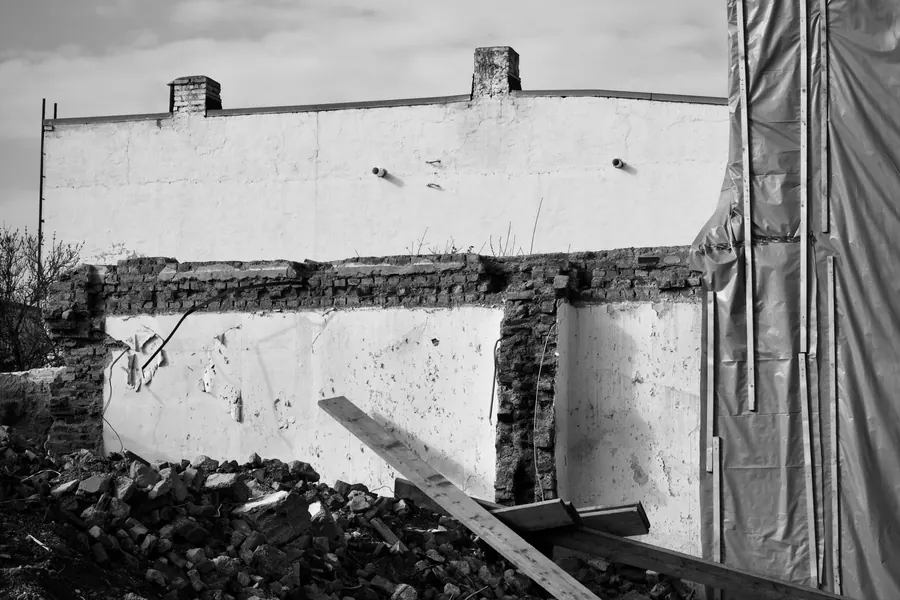
Plenty of older Croydon lofts fall short. The most common fault we find is brickwork that simply stops a course or two below the slates, so you can see straight through into next door’s loft. On some cheaply built late Victorian rows the wall in the roof space is a single half-brick skin, and now and then it is barely there at all.
Where the gap was closed, it was often packed with whatever was to hand: old mortar, rags, newspaper, later a wad of loft insulation. That keeps the draught out and does nothing in a fire. Lime mortar at the head of the wall also dries out and drops away over a century, so even a well-sealed top opens up in time. Then there are the holes people made themselves, for cables, aerial leads, pipes and the odd tank overflow, running from one loft to the next.
None of this has to be fixed retrospectively just because it would not pass today. But a missing upstand means a fire in one loft can reach the next in minutes, and it also gives water, mice and wasps an open route along the terrace. When we re-roof, or when a loft conversion goes in, the head of the party wall should be built up and sealed properly, and it is cheap to do while the slates are off.
The shared chimney stack, briefly
The stack on the party wall is the most obviously shared thing on the roof, with your flues on one side and theirs on the other. We have already written a full guide to chimney stacks on Croydon houses, covering repointing, rebuilding, capping and removal, so here we’ll just pick out the bits that matter when two households are involved.

The stack is a party structure, so repairs needed because of age or neglect are normally shared in proportion to the use each house makes of it. That usually means half each. Taking it down, or cutting it back, is notifiable work under the Act. And because a leak around a stack often shows up on the chimney breast of the house that did not cause it, the flashing on next door’s side can be the reason for the stain on your bedroom wall.
Leaks that cross the boundary
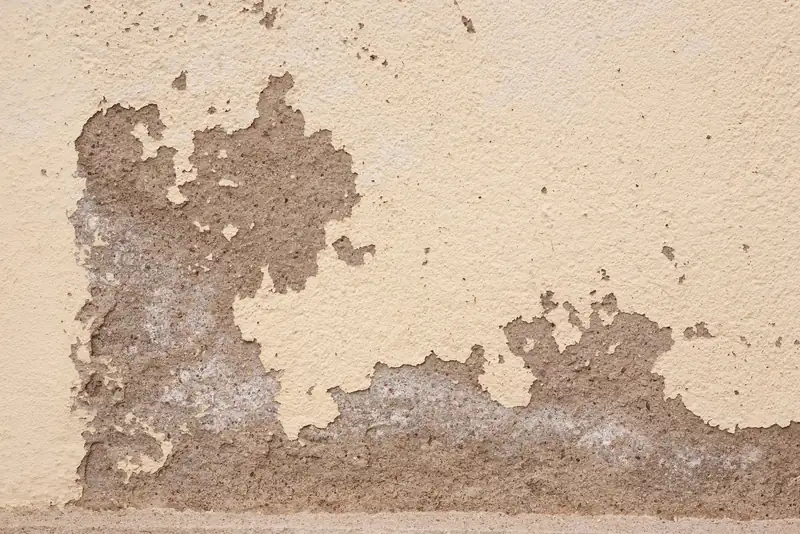
Water does not respect title plans. Rain getting in through a slipped slate on next door’s slope can run down the felt, along a batten that crosses the party wall and drip onto your ceiling a metre or more from where it entered. On terraces the usual culprits are a cracked or missing slate near the wall line, the mortar at the head of the party wall washing out so rain blows straight through, the lead around a shared stack, and the valley gutter between two back additions. On semis, it is more often the shared ridge or hip, where one half was rebedded and the other was not.
How to work out whose side it is
Go up after heavy rain with a strong torch. Look for a wet line on the felt or the rafters and follow it uphill to the highest damp point. If that point is on your side, it’s your repair. If the trail leads to the party wall, check whether the wall top itself is wet; if it is, the water may be getting in through the gap at the head of the wall, which is a shared defect. If you can see water coming through from next door’s loft, the fault is theirs. Take photographs with the date showing. On the jobs we see on Croydon’s terraces, a surprising number of “my roof is leaking” calls end with a hole in the house next door.
If it is their side, the fix is their call and their bill. Show them the pictures, offer to let their roofer look from your loft, and keep it friendly. Where someone flatly refuses and the damage carries on, that stops being a roofing question and becomes a legal one, and a solicitor is the right person to talk to about nuisance and recovering your costs.
When the Party Wall Act applies to roof work
The government’s guidance on party walls and building work says you must tell your neighbour if you plan to build on or at the boundary, work on an existing party wall or party structure, or dig near and below the level of their foundations. Its examples include cutting into a party wall, making it taller, shorter or deeper, removing chimneys from it, and knocking it down and rebuilding it. Minor jobs such as plastering, rewiring and drilling for shelves are left out.

Roof jobs that usually need notice
- Raising the party wall in the loft, which is common in loft conversions where the wall is built up to the new roof line.
- Cutting pockets into the party wall for steel beams or new rafters to bear on.
- Rebuilding the top of the party wall or a parapet that runs along it.
- Taking down, rebuilding or cutting back a chimney stack on the party wall.
Roof jobs that usually don’t
Replacing slipped slates or tiles on your own slope, rebedding your half of a ridge, renewing your own gutters and fascias, and stripping and re-covering your own side without touching the wall. The explanatory booklet that sits behind the guidance gives a useful test for anything in between: could the work affect the strength or support of the wall, or damage next door’s side of it? If the honest answer is “possibly”, serve notice. It costs a letter.
Two points catch people out. The Act runs alongside planning permission and building regulations rather than replacing them, so having one does not excuse you from the others. And Croydon Council has no part in it at all. The Act is a private arrangement between owners, which is why the council’s building control team will not get involved in a disagreement about a party wall notice.
Notice, replies and surveyors: how the timing works
For work to the party wall itself, notice has to reach your neighbour between two months and a year before the start date, in writing, describing what you intend to do. A notice older than a year has lapsed. Your neighbour can then consent in writing, refuse, or serve a counter notice asking for extra work to be done at the same time, at their cost if it benefits them. They have 14 days to say yes in writing. If nothing comes back in that time, the law treats it as a dispute, not as agreement.

A dispute goes to a surveyor. You can share one agreed surveyor, which keeps costs down on a small domestic job, or each appoint your own, and if your neighbour refuses to appoint anyone you can appoint one for them. Neither owner can act as their own surveyor. The surveyors produce a party wall award, a legal document setting out what work happens, how and when it is done, and who pays which parts, surveyors’ fees included. Either side can appeal it at the county court within 14 days. Usually the person doing the work pays, but where the work is needed because the wall is defective, the cost can be shared according to each owner’s use of it.
You cannot start any sooner unless your neighbour agrees in writing, which is a good reason to raise a roof project with them early. If a stack is about to come down or the roof has opened up in a storm, make the area safe first. A temporary cover or a stack taken down to a safe height is not the same as the planned work, and the notice can follow for the permanent repair.
Dealing with the neighbour
Knock on the door before anything goes in the post. Most notices that turn into disputes do so because a formal letter arrived out of nowhere, not because the neighbour objected to the work. Explain what is wrong, show them photos from the loft, and tell them what you plan to do and roughly when. Then put the notice in writing anyway. Any agreement you reach should be recorded on paper, and a friendly chat now does not stop a tense one later.

Croydon throws up a few complications. Next door may be split into flats, and the Act counts as an “owner” anyone with a lease of more than a year as well as the freeholder, so a single converted house can mean three or four people to notify. If that is your situation, our post on who pays for roof repairs in Croydon conversions explains how the roof is usually split inside the building. Next door may be let, in which case the landlord, not the tenant, is the one who has to receive the notice and agree. And if the work needs access from their side, the Act gives your workmen a right of entry for notified work on 14 days’ notice, except in an emergency.
Ordinary repairs that are not party wall work fall outside that right of entry. If your neighbour will not let a roofer onto their side to reach a repair to your own roof, the Access to Neighbouring Land Act 1992 lets you apply to the court for an access order for basic preservation work. It is a last resort, and a slow one. A biscuit tin and a clear explanation work faster.
Getting a shared roof looked at properly
A good survey of a joined house covers both sides of the line, even if only one side is paying. We check the head of the party wall from inside the loft, look at the stack and its flashings from a ladder, trace any staining back to its source, and put it in a short written report with photographs that you can hand to your neighbour, or a surveyor, without editing. That report is often what turns a standoff into a split bill.
Frequently asked questions
Do I need to serve a party wall notice to re-roof my half of a Croydon semi?
Not always. Stripping and re-covering your own slope, without cutting into the party wall, raising it or rebuilding its top, is generally treated as work to your own roof rather than to the shared wall. Once the job involves cutting into the party wall, building it up to the underside of the roof, rebuilding a section of it or taking down a chimney that sits on it, the Party Wall etc. Act 1996 applies and you must give notice between two months and a year before starting. If you are unsure, serving notice costs very little and removes the argument.
Water is coming through from my neighbour's side of the roof. What can I do?
Start with a photo of the stain, a look in the loft with a torch and a polite word next door, because most neighbours have no idea their roof is the cause. A roofer can usually show where the water is getting in from the loft or from a ladder. If the defect is on their side, the repair is theirs to arrange. If they refuse and the damage continues, that becomes a legal matter, and a solicitor can advise on nuisance claims and, where you need to get onto their land to protect your own house, an access order under the Access to Neighbouring Land Act 1992.
Does Croydon Council deal with party wall disputes?
No. The Party Wall etc. Act 1996 is a private arrangement between neighbouring owners, and the council has no role in serving notices, appointing surveyors or settling disputes. Croydon Council's building control team only becomes involved when the work also needs building regulations approval, such as a loft conversion or a full re-roof, or when a structure has become dangerous.
What happens if my neighbour ignores a party wall notice?
Silence is not consent. If your neighbour has not replied in writing within 14 days, the Act treats it as a dispute, and the matter goes to surveyors. You can appoint one surveyor that you both agree on, or each appoint your own, and if your neighbour will not appoint anyone you can appoint a surveyor on their behalf. The surveyors then issue a party wall award setting out how the work is done and who pays for what.
Free roof survey and a fixed written quote
Anywhere in Croydon and the surrounding CR postcodes. No call-out fee.